Plantation, FL
Garage Door Sensor Repair in Plantation, FL
Door keeps reversing for no reason? Blinking orange light? 9 times out of 10, a $65 fix — not a $400 opener replacement.
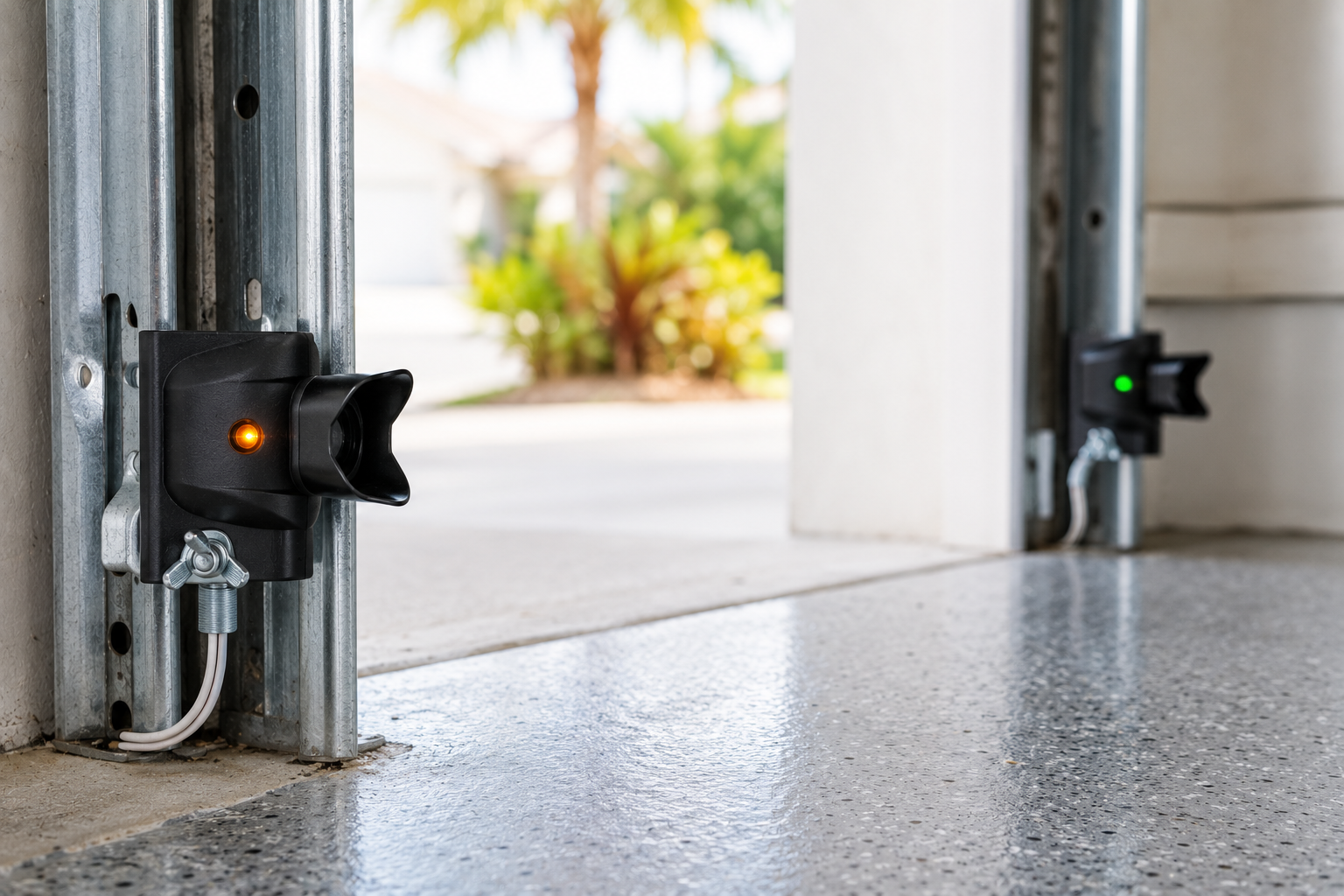
Quick Answer: Why does my garage door reverse before it closes in Plantation?
Most often, your garage door’s photoelectric safety sensor beam is broken or misaligned. Here in South Florida, common culprits include a gecko perched on the sensor lens, a spider web spun right across the beam, or the harsh afternoon sun angle confusing the receiver. Fixing this usually costs between $50 and $150, and we offer same-day repairs throughout Plantation neighborhoods like Jacaranda, Central Park, and Westside.
How Photoelectric Safety Sensors Work
Garage door safety sensors are a critical part of your door’s safety system, required by the UL 325 safety standard since 1993. These photoelectric sensors consist of a transmitter and a receiver mounted at floor level on either side of the garage door opening. The transmitter sends an invisible infrared beam straight to the receiver. When this beam is interrupted—by a child, pet, or object—the sensor signals the opener to automatically reverse the door, preventing injury or damage.
Typically, these sensors have LED indicator lights: a green light on the receiver side signals proper alignment and power, while an amber or orange light on the transmitter indicates it’s sending a signal. A blinking light usually means the beam is blocked, misaligned, or there is a wiring issue. Understanding these lights helps homeowners and technicians quickly diagnose problems before they escalate.
The Plantation Sensor Hall of Fame: Why FL Homes Have More Sensor Problems
Geckos and Anoles: South Florida’s ubiquitous lizards have a secret favorite hangout — your garage door sensor housings. At night, these warm, cozy sensor boxes become prime real estate for geckos and anoles who perch directly on the sensor lens, completely blocking the beam. You press the remote, hear the opener hum, but the door refuses to close. By the time you check, the little critters have vanished like ghosts. Homeowners often joke about ghostly interference, but no, it’s just a gecko playing hide and seek.
Spider Webs: Early risers in Plantation Gardens and Plantation Acres might notice a fine mystery web spun overnight across the sensor beam. Invisible to the naked eye until the door won’t close, these webs cause the sensor to think something is blocking it. It’s an early-morning stealth attack by the local spider population.
Direct Sun Angle: Florida’s low afternoon sun, especially from October through February, can overpower the receiver LED causing false “blocked” signals. West-facing garages in Westside and Jacaranda are especially vulnerable. When the sun’s rays hit just right, the sensor thinks the beam is interrupted and reverses the door unnecessarily.
Lawn Equipment Vibration: Weekly lawn mowing, a staple in neighborhoods like Central Park and Midtown Plantation, creates vibrations that gradually knock sensors out of alignment over months, requiring periodic adjustments to keep everything working smoothly.
Wiring Corrosion: Plantation’s constant 85%+ summer humidity combined with salty coastal air takes a toll on sensor wiring connections. Oxidation and corrosion build up, especially in outdoor wiring exposed near the door frame, causing intermittent sensor failures that can be frustrating to diagnose.
Sensor LED Blinking Codes Explained
Many garage door openers use LED blinking patterns on the sensor to communicate specific issues. For LiftMaster and Chamberlain models, here's what those blinks mean:
- 1 blink: Sensor beam is blocked or misaligned.
- 2 blinks: Short circuit or wiring fault detected.
- 4 blinks: Safety sensor wiring error — usually a loose or damaged wire.
- 10 blinks: Door lock mode is active, preventing operation.
Note that Genie openers use different diagnostic codes, so it’s important to refer to your specific model’s manual or call a trusted local technician familiar with all major brands like Amarr, Clopay, and Wayne Dalton.
Dirty/Blocked vs. Misaligned vs. Failed: How We Diagnose
When you call Garage Door Repair of Plantation for sensor issues, we start with a thorough visual inspection of both sensors, looking for dirt, spider webs, or gecko footprints—yes, really. We test the beam by manually interrupting it to confirm the door reverses properly. If the door doesn’t respond, we check sensor alignment and adjust it carefully, as vibration and weather can gradually misalign sensors over time.
Next, we conduct wiring continuity tests to detect corrosion or breaks in the wiring harness, common in Plantation’s humid, salty air. If cleaning and realignment restore function, great! But if the sensors or wiring are damaged beyond repair, we recommend replacement with high-quality sensors from trusted manufacturers like LiftMaster or Chamberlain, ensuring compliance with Florida Building Code and Broward County standards.
Wiring and Corrosion in South Florida Garages
In Plantation’s neighborhoods such as Central Park and Midtown Plantation, many garages have sensor wiring runs that are exposed to the elements. The combination of over 85% summer humidity and salt air from nearby coastal environments leads to corrosion on sensor housing metal parts and wiring connections. This corrosion can cause intermittent sensor failures or complete loss of function.
When repairing or replacing sensors, we take extra care to seal junction boxes and wiring runs with corrosion-resistant materials and weatherproof sealants. We also use wiring sheaths designed for South Florida’s harsh climate to prevent moisture ingress. This proactive approach extends sensor lifespan and ensures reliable garage door operation, even during hurricane season when Miami-Dade NOA wind-load compliance is critical.
Our Sensor Repair Process
- Initial Phone Consultation: We discuss symptoms and schedule same-day service in Plantation, Fort Lauderdale, Davie, and surrounding areas.
- On-Site Inspection: Our technician performs a detailed visual check of sensors, wiring, and opener diagnostics.
- Cleaning: Remove dirt, spider webs, and animal residue from sensor lenses and housings.
- Alignment Adjustment: Realign sensors precisely to ensure a strong, uninterrupted infrared beam.
- Wiring Check and Repair: Test wiring continuity; replace or seal corroded wires and connectors.
- Final Testing and Cleanup: Verify sensor operation with multiple open/close cycles and clean up work area.
Sensor Repair Pricing
| Service | Price Range |
|---|---|
| Sensor Cleaning + Alignment | $55 - $85 |
| Single Sensor Replacement | $95 - $130 |
| Both Sensors Replaced | $140 - $190 |
| Wiring Repair | $65 - $120 |
| Full Sensor Upgrade (MyQ-compatible) | $165 - $220 |
Service Areas in Plantation & Surroundings
We proudly serve Plantation’s neighborhoods including Jacaranda, Central Park, Plantation Gardens, Plantation Acres, Westside, and Midtown Plantation. Our licensed technicians also provide expert sensor repair services in nearby cities such as Fort Lauderdale, Davie, Sunrise, and Lauderhill.
No matter the location or sensor brand—LiftMaster, Chamberlain, Genie, Amarr, Clopay, or Wayne Dalton—we ensure code-compliant repairs aligned with the Florida Building Code and Broward County regulations.
Frequently Asked Questions
- 1. Is it really just a lizard blocking my sensor?
- Yes! Geckos and anoles love to perch on warm sensor housings at night. They’re often the unseen culprits behind sudden sensor blockages in Plantation garages.
- 2. How do I tell if my sensors are aligned?
- Most sensors have LED indicators. A steady green light usually means proper alignment and power. If the light blinks or turns amber, your sensors may be misaligned or blocked.
- 3. Can I clean my sensors myself?
- You can gently clean sensor lenses with a soft cloth to remove dirt or spider webs. However, avoid harsh chemicals and be careful not to bump or misalign the sensors.
- 4. How do I know if the problem is my sensors or door reverse adjustment?
- If your door reverses immediately after starting to close, it’s usually a sensor issue. If it reverses after hitting the floor or an object, the reverse force setting might need adjustment.
- 5. Are my existing sensors MyQ compatible?
- Older sensors might not support MyQ features fully. We can upgrade your sensors to MyQ-compatible models from LiftMaster or Chamberlain for smart home integration.
- 6. Why are new home sensors already failing?
- Exposure to South Florida’s humidity, salt air, and direct sun can cause premature sensor failure, especially if wiring and mounting are not weatherproofed properly.
- 7. How long do garage door sensors typically last?
- With proper maintenance, sensors last 7-10 years. Local factors like humidity and salt air can shorten their lifespan if not regularly inspected and cared for.
Sensor Blinking? We'll Have It Fixed Same Day.
Don’t let a faulty sensor keep your garage door from working properly. Our expert technicians are ready to diagnose and repair your garage door sensors quickly and affordably in Plantation and nearby Broward County neighborhoods.
Call Now: (754) 324-3560