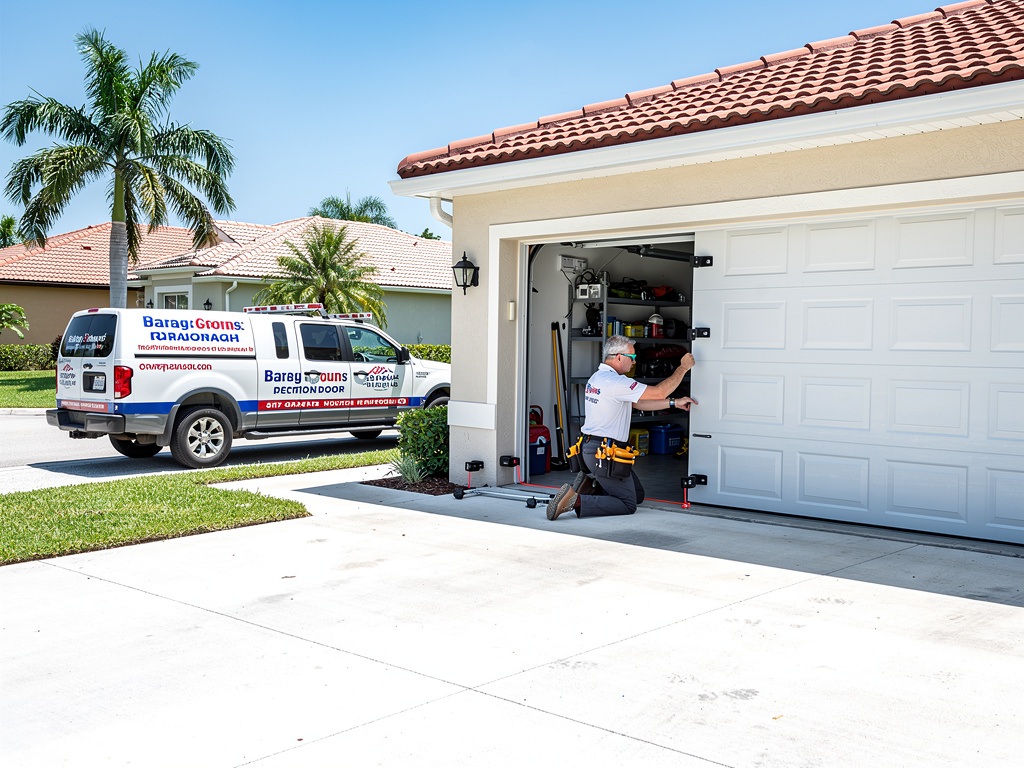
How Safety Sensors Work and Standards for Garage Doors in Plantation, FL
June 24, 2026 — Plantation
In Plantation, FL, garage door safety sensor standards require installing photoelectric sensors within 6 inches of the floor on both sides of the door opening to detect obstructions. These sensors must meet UL 325 safety certification and comply with local HOA guidelines to ensure reliable operation despite South Florida’s humidity, salt air, and wildlife factors.
Living in Plantation, Florida means enjoying the beautiful neighborhoods like Jacaranda, Plantation Acres, and Cobblestone Creek. But with our tropical climate comes a unique set of challenges, especially when it comes to home safety features like garage doors. Our garage doors protect our vehicles and belongings, and the safety sensors play a critical role in preventing accidents. Here, we explore how these sensors work and the specific standards homeowners in Plantation need to know.
Whether you live in the tree-canopied streets of Central Park or the family-friendly community of Plantation Isles, understanding garage door safety sensor standards is essential. We’ll also discuss how humidity, frequent hurricane prep, and even local geckos can impact your system’s performance. As your local experts, we’re here to keep your garage door running safely and smoothly year-round.
How Garage Door Safety Sensors Work in Plantation Homes
Garage door safety sensors are small electronic devices installed near the floor on either side of the garage door. They project an invisible infrared beam across the door opening. When something interrupts this beam — whether it’s a child’s toy, a pet, or a person — the sensors immediately signal the door to stop closing and reverse back up. This prevents injuries and property damage.
In neighborhoods like Jacaranda and Plantation Acres, where families with children often play near the driveway, these sensors are crucial. The South Florida environment plays a role in sensor reliability — our high humidity and salt air can sometimes cause sensors to malfunction if not properly maintained. We recommend annual professional checks to ensure the sensors remain aligned and clean.
Mandatory Safety Sensor Standards in Plantation, FL
Plantation homeowners must comply with the ANSI/UL 325 safety standard, which requires all automatic garage doors installed after 1993 to include photoelectric sensors. These sensors must be installed no higher than 6 inches from the ground to detect objects in the door’s path effectively. This standard is often enforced through neighborhood HOA rules, especially in gated communities like Cobblestone Creek and Central Park.
HOA regulations in Plantation also dictate aesthetic and equipment standards, including the type and color of sensor covers allowed. Many homeowners find these rules beneficial because they promote consistent safety measures across the community. When we service garage doors in Plantation Isles or other neighborhoods, we ensure that sensor installations meet both state laws and HOA guidelines.
Environmental Challenges Affecting Garage Door Sensors in South Florida
The South Florida climate presents unique obstacles to sensor performance. High humidity and frequent summer storms can cause sensor lenses to fog up or corrode over time. Salt air, especially on homes closer to the coast, can degrade wiring and sensor casings if not properly shielded.
One surprising local issue is the presence of small reptiles like geckos and anoles, common in Plantation’s lush backyards. These curious creatures sometimes perch on or near sensor units, causing false triggers or occasional misalignment. Our technicians know these local quirks and carefully inspect for wildlife interference during each service call to maintain safe operation.
Preparing Your Garage Doors and Sensors for Hurricane Season
Hurricane season adds an extra layer of caution for Plantation residents in communities like Jacaranda and Plantation Acres, where mature tree canopies increase the risk of debris damaging garage doors. Well-functioning safety sensors allow for quick and safe operation, which is vital when securing your home ahead of a storm.
We recommend pre-storm inspections to verify sensor alignment and electronic function. If sensor damage or corrosion is detected, replacing components before hurricane season can prevent costly repairs after a storm. Our team offers convenient emergency service hours throughout the season, ensuring Plantation homeowners get prompt assistance whenever needed.
Local Expertise You Can Trust for Garage Door Safety
As a Plantation-based company serving neighborhoods from Cobblestone Creek to Plantation Isles, we understand the specific needs of South Florida homes. Our technicians are trained to address local environmental challenges and HOA regulations with precision and care.
We use industry-leading parts certified to UL 325 standards and stay current with evolving safety codes in Florida. Whether you need a sensor repair, a full door replacement, or safety upgrades for your Plantation garage door, we provide honest assessments and reliable service. Keeping you and your family safe is our top priority.
Frequently Asked Questions
What is the required height for garage door safety sensors in Plantation?
Safety sensors must be installed no more than 6 inches off the ground to effectively detect objects in the door’s closing path, complying with UL 325 standards and local regulations.
Do HOA rules affect garage door sensor installations in Plantation neighborhoods?
Yes, many Plantation HOA communities, such as Central Park and Cobblestone Creek, have specific guidelines regarding sensor appearance and placement to maintain neighborhood standards and safety compliance.
How often should I have my garage door safety sensors inspected in South Florida?
Given the high humidity and environmental factors in Plantation, it’s best to have sensors professionally checked at least once per year to ensure proper alignment, cleanliness, and operation.
Can geckos or other wildlife interfere with garage door sensors?
Yes, local reptiles like geckos and anoles sometimes rest on sensor housings, which may affect sensor alignment or trigger false stops. Regular maintenance helps prevent these issues.
What should I do to prepare my garage door sensors for hurricane season?
Schedule a professional inspection before hurricane season to verify sensor functionality and protect wiring from storm damage. Prompt repairs or replacements can avoid emergency malfunctions during storms.